By STTC
November 15 2026
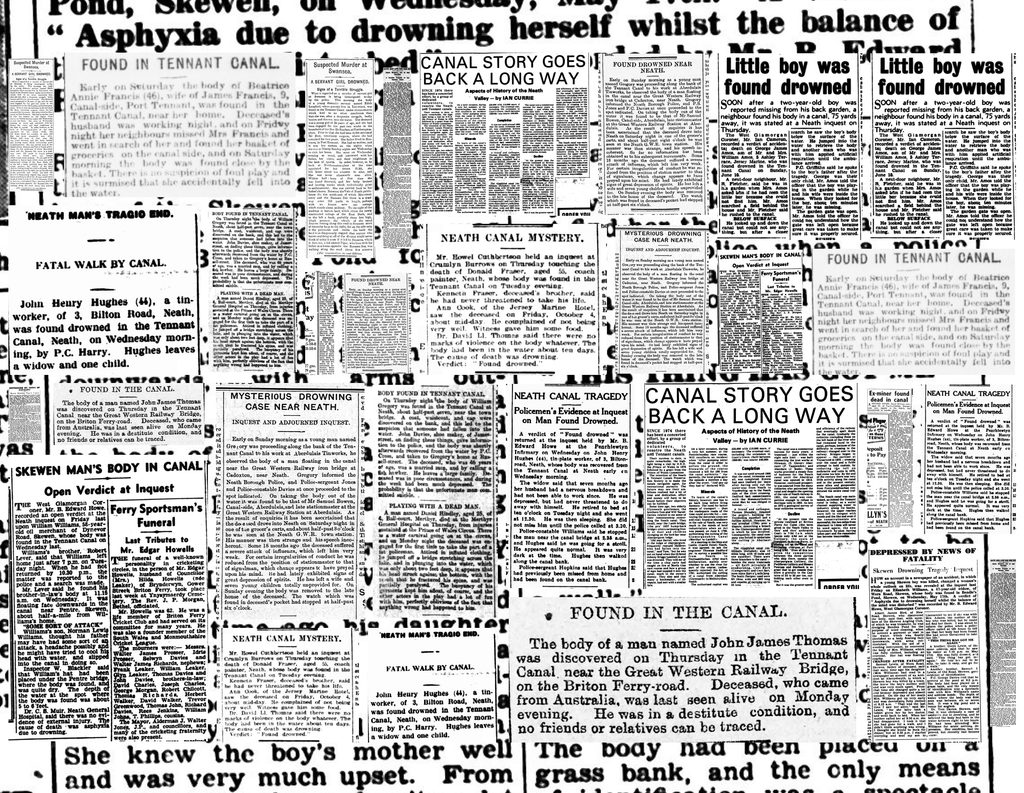
Newspaper archives and historical records reveal a series of tragic incidents where men, women and children lives were tragically lost in or around its waters.
The Tennant Canal is remembered today for its rich industrial heritage, remarkable engineering and importance to the development of the Neath and Swansea Valleys. Yet alongside this story of enterprise and progress lies a far more sombre chapter.
Since the canal opened in 1824, its waters have been associated with a significant number of tragic deaths. Research of contemporary newspaper reports and historical records has uncovered a long and often heartbreaking catalogue of accidents, drownings, suicides and other fatal incidents connected with the waterway.
Many of these tragedies involved ordinary local people whose names have long since faded from public memory. Some were workers employed along the canal, while others were boatmen, labourers, residents and visitors. Particularly distressing are the numerous incidents involving children, many of whom lost their lives after falling into the canal while playing nearby.
A Dangerous Environment
To modern eyes, it may seem extraordinary that a relatively narrow canal could claim so many lives. However, the Tennant Canal presented a number of hazards throughout much of its history.
When first constructed, the canal is believed to have had an average depth of approximately six feet (1.8 metres). For those unable to swim, especially children, such depths could prove fatal. The canal’s stone-lined edges often provided little opportunity for a person to climb back out once they had entered the water.
In many locations, steep banks, dense vegetation, poor lighting and isolated stretches increased the danger. During the nineteenth and early twentieth centuries, there were few safety barriers, warning signs or organised rescue services. A fall into the canal, particularly at night or in bad weather, could quickly become a tragedy.
Although natural silting gradually reduced water depths in parts of the canal over the decades, many sections remained sufficiently deep to present a serious hazard.
Accidents and Drownings
Historical newspapers contain numerous reports of accidental drownings on the Tennant Canal. Some victims slipped from towpaths or canal banks, while others fell into the water whilst fishing, working or attempting to cross nearby structures.
Children were particularly vulnerable. At a time when many families lived close to the canal and children enjoyed considerable freedom to explore their surroundings, the waterway was an ever-present attraction. Unfortunately, curiosity and play occasionally ended in disaster.
Each incident brought heartbreak to families and communities, with local newspapers often recording scenes of grief as loved ones searched for missing relatives or gathered along the canal bank following a tragedy.
A Mother’s Final Act of Courage
Cambria Daily Leader, 9 July 1906.
One of the most tragic incidents recorded on the Tennant Canal involved Esther Ann Price, the wife of a manager at the Cape Copper Works at Red Jacket.
In July 1906, Mrs Price and her four-year-old son, Glyn, travelled by train to Jersey Marine to spend the day at the beach. After enjoying their outing, they began the walk back to the railway station for their journey home.
As they passed the nearby Tennant Canal, young Glyn persuaded his mother to stop and visit the waterway before catching their train. While near the canal bank, the child spotted some flowers growing close to the water’s edge. In attempting to reach them, he lost his footing and fell into the canal.
Without hesitation, Mrs Price entered the water in an effort to rescue her son.
Although local fisherman Thomas J. Rees succeeded in pulling the boy to safety, Mrs Price became trapped beneath the water and tragically drowned.
At the inquest, evidence showed that she had sacrificed her own life whilst attempting to save her child. The Coroner firmly rejected suggestions that the death had been anything other than a brave rescue attempt, describing her actions as heroic.
“There was no doubt that the boy slipped into the water, and the mother, in an heroic way, went to save him and sacrificed her life.”
The tragedy shocked the local community. Mrs Price was well known in Neath, and contemporary newspaper reports described widespread sympathy for her husband, Thomas, who learned of the devastating loss later that evening.
Contemporary newspaper reports described him as being heartbroken by the terrible news.
More than a century later, Esther Price’s story remains one of the most moving and poignant tragedies associated with the Tennant Canal, a lasting reminder of both the dangers of open water and the courage of a mother determined to save her child.
Source: Cambria Daily Leader, 9 July 1906.
Suicides and Unexplained Deaths
The canal was also the location of numerous suicides and suspected suicides throughout its history.
Newspaper accounts reveal a number of cases in which individuals entered the water intentionally, often during periods of personal hardship or ill health. Coroners’ inquests frequently attempted to establish the circumstances surrounding these deaths, though in some cases the true reasons may never have been known.
The recovery of bodies from the canal was sadly not uncommon, and reports of unexplained discoveries regularly appeared in local newspapers during the nineteenth and twentieth centuries.
Remembering Forgotten Lives
Behind every newspaper report was a real person and a real family affected by loss. While many of the names recorded in the archives are now largely forgotten, they remain an important part of the Tennant Canal’s history.
The purpose of documenting these incidents is not to sensationalise tragedy, but to preserve an often-overlooked aspect of the canal’s past. The canal was not only a place of trade and transportation. It was also part of the daily lives of thousands of people who lived and worked alongside it.
Remembering those who lost their lives helps us gain a fuller understanding of the waterway and the communities it served.
Ongoing Research
Research into deaths associated with the Tennant Canal is ongoing. As additional newspaper reports, inquest records and historical documents come to light, further information continues to emerge about the individuals whose lives became linked with the canal.
If you possess family records, photographs, newspaper cuttings or information relating to any incident connected with the Tennant Canal, Save the Tennant Canal would be grateful to hear from you.
By preserving these stories, we ensure that those whose lives were touched by the canal are not lost to history.
Sources and Acknowledgements
The information used in this article was compiled from the British Newspaper Archive.