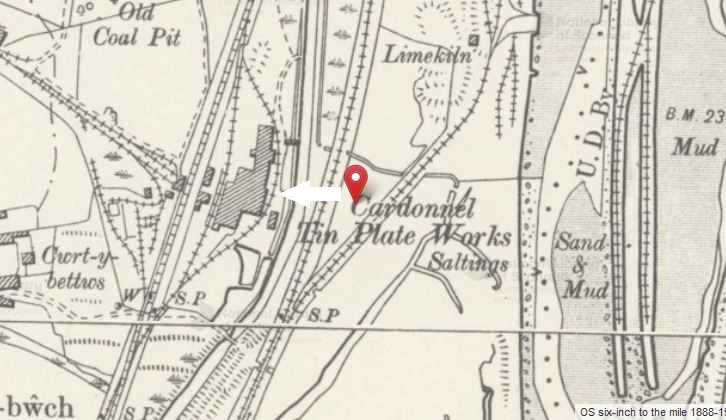
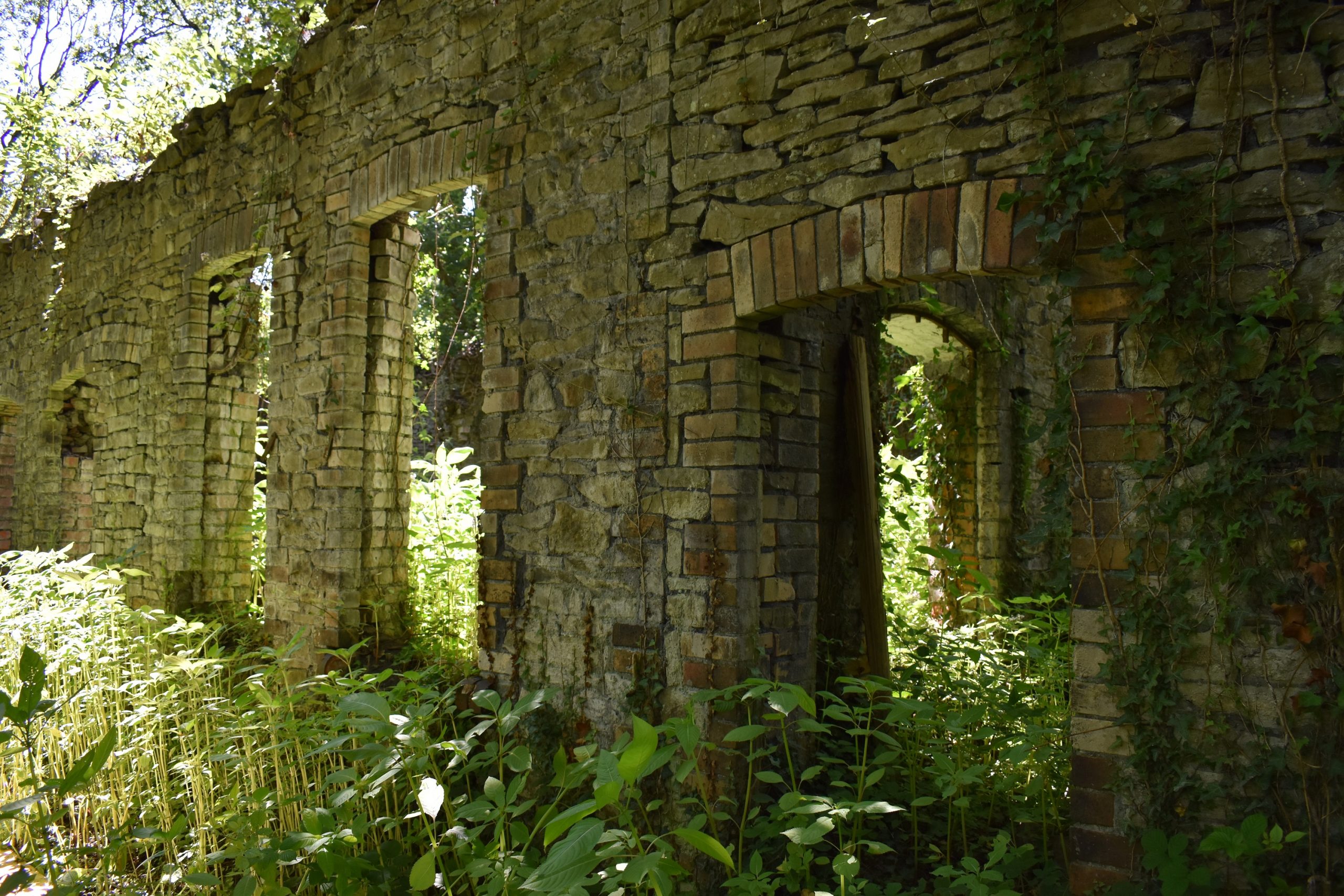
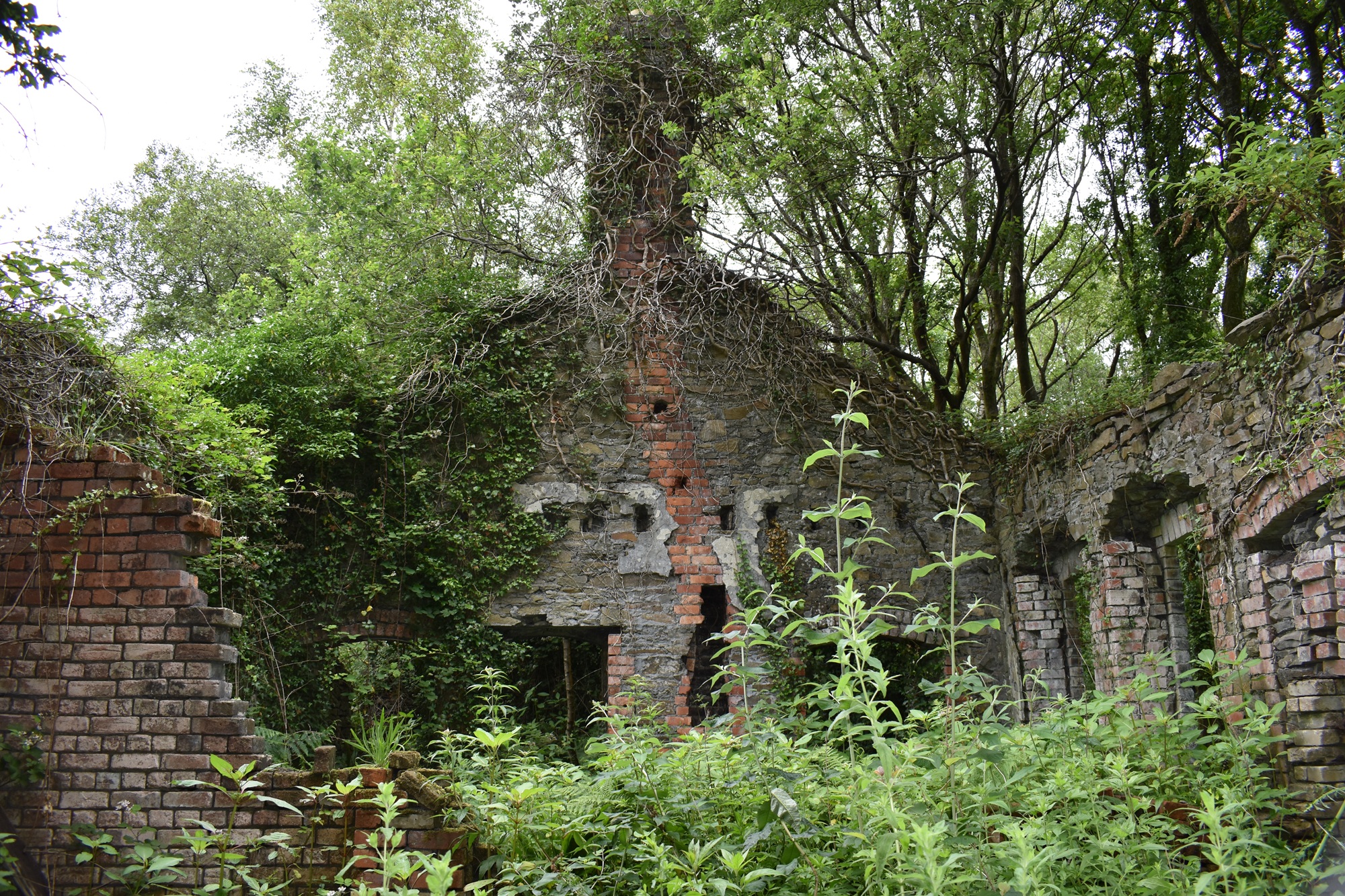
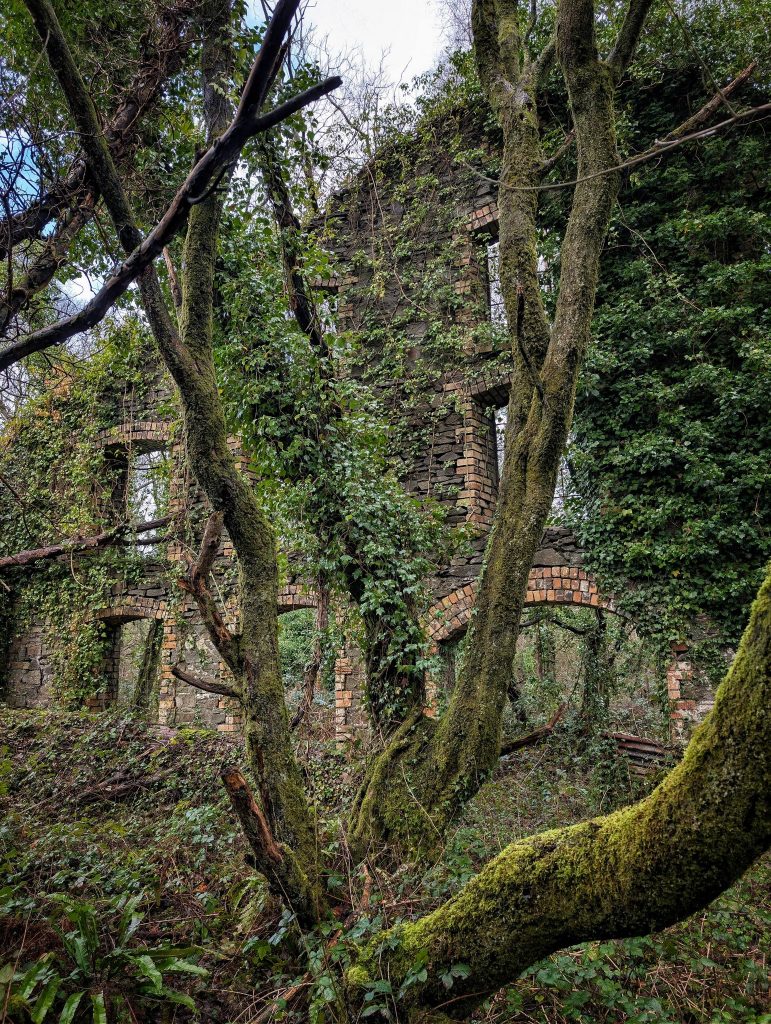
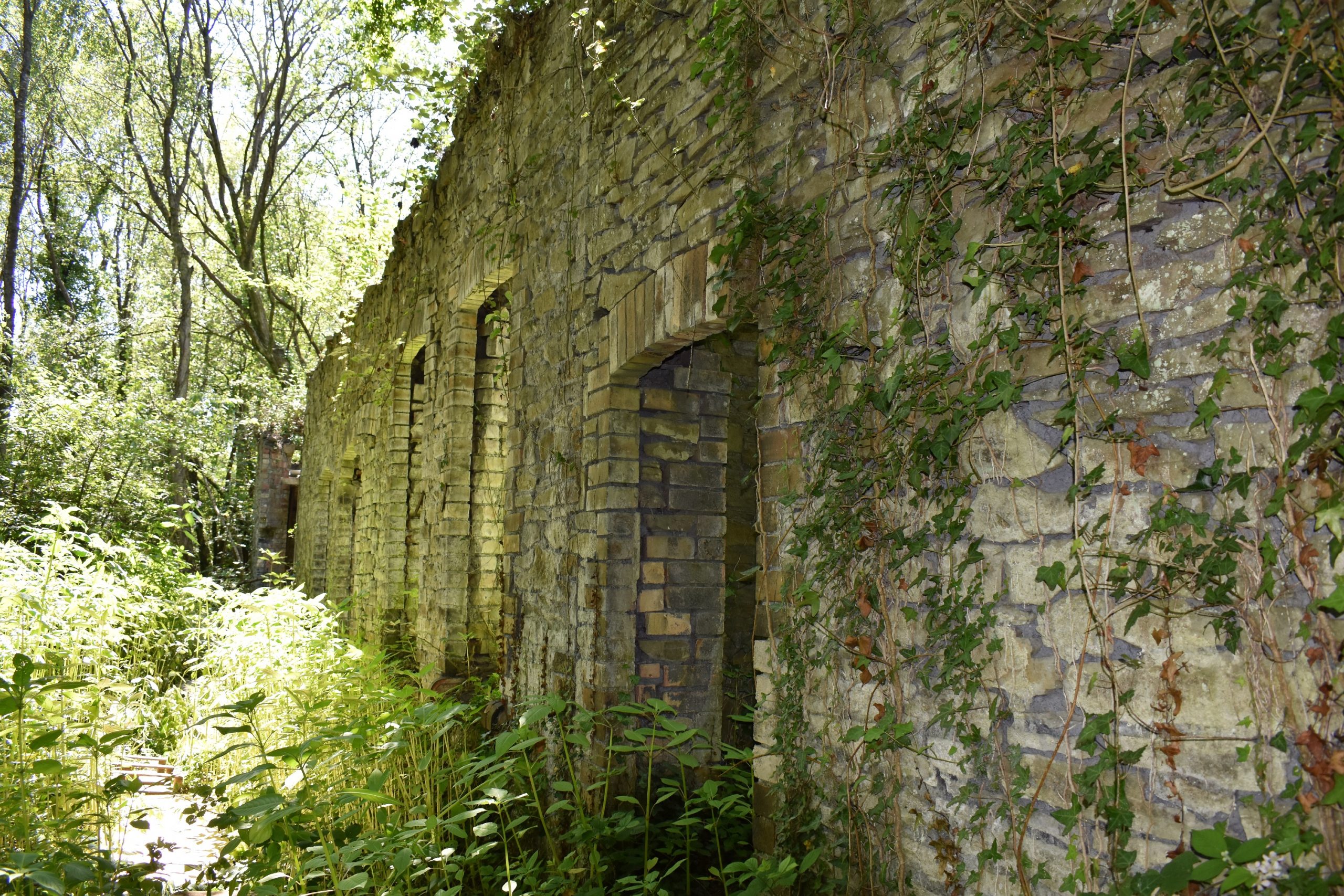
Cardonnel Tinplate Works at Skewen opened in 1891.
List of Historic Places – Recorded name: Cardonnel Tin Plate Works.
Cardonnel Tinplate Works opened in 1891 – 1940. The premises were requisitioned by the Ministry of Supply in 1942 and the buildings were offered for sale in 1948. Info by British Listed Buildings.
South Wales Echo
April 04, 1891
Opening of a New Tinplate Works.
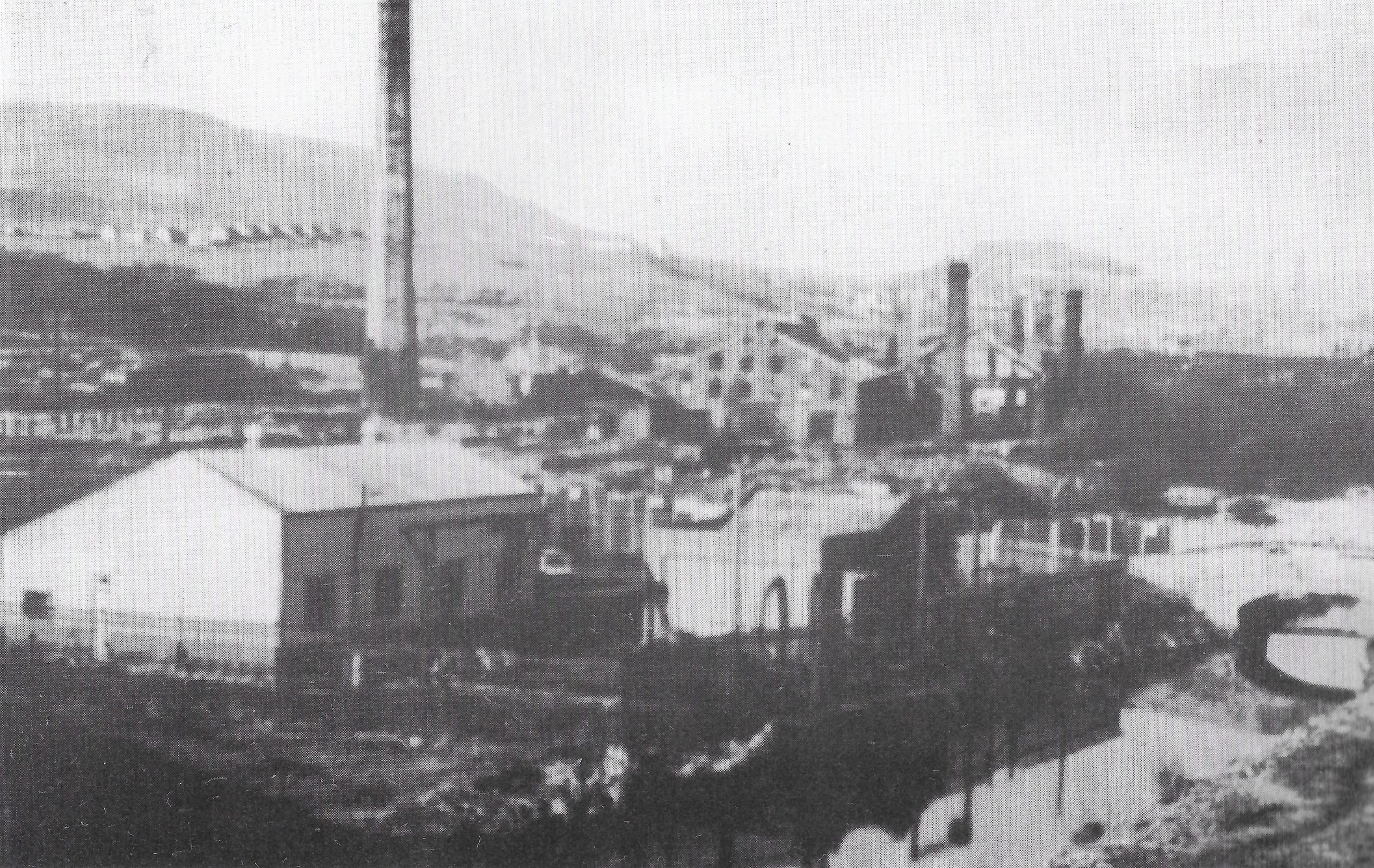
The Cardonnel Tin-Plate Works were formally opened on Thursday, under circumstances with augur well for the success of the undertaking. Not withstanding the unpropitious weather, a large company assembled to witness the interesting ceremony.
The works are built on the most approved principles. At present there are only two mills, but the company proposes to considerably enlarge the works, and ere long hope to have eight mills in full swing.
The engine, which is by Westray, Copeland, and Co. Limited, is of 400-horse power, of exceptionally strong make, and governed by Joy’s automatic valve gearing.
The works are most favourably situated on what is known as the Burrows, within five miles of the East Dock, Swansea. They directly abut on the Great Western Low Level Railway on the one side, and on the Tennant Canal on the other, thereby direct access to the Prince of Wales Dock by rail and water.
We understand the company will not use flux of any kind, but intend to turn out plates of the very best heavily-coated quality. The works already afford employment to a number of hands, and in due course the number will be greatly augmented.
The following are the names of the gentlemen comprising the company:-Dr T. P. Whittington (chairman), Mr T. Leyson (Penyscynnor), Mr W. Rosser (Brynamlwg), Mr Wm. Davies (Plasyfelin, Glynneath), and Mr J. H. Strick, Sea View, Skewen, all of whom are actively identified with various industries in the district.
The works will be under the management of Mr Strick, a gentleman of great practical experience in the tin-plate trade.
National Library of Wales Archive
The South Wales Daily Post.
April 04, 1891
Killed on the Line at Skewen.
The Inquest. Mr Coroner Cuthbertson held an inquest on Thursday Morning on the body of Thomas Evans aged 64, employed as a night watchman at Cardonnel Tin-plate Works, was found dead on the line on Wednesday.
The deceased was walking on the down line (Low Level, G,W,R,) and was, no doubt killed instantly. It is said that he was going home to prepare breakfast for his sons.
A verdict of “Accidental death” was returned. It was earlier reported that beside the body of deceased was found the body of his dog, which had apparently been ran over by the train. Evans leaves a widow and several grown-up children.
National Library of Wales Archive
South Wales Daily Post
August 17, 1898
The Apocalyptic Heatwave.
The apocalyptic end to the heatwave of 1898 when day turned to night and it rained sand.
The sky turned black, blue-violet lightning brought chimneys down on pedestrians and set trousers on fire, and hens roosted in the daytime.
August 1898 saw Wales, in common with much of northern Europe, basking in hot temperatures and glorious sunny days. The weather was set fair. But it would come to a dramatic and sudden end.
After a week of soaring temperatures, on the night of August 17, 1898, the temperature dropped dramatically, and midnight was described as “delightfully cool”.
When dawn broke the following day, the South Wales Daily Post – as the South Wales Evening Post was called at the time – reported a “peculiar” sunrise with “the orb of day coming up from the horizon like a ball of deep-red fire” which left Swansea Bay looking as if it was “bathed in the reflection of a great conflagration”.
At 10.30am the paper reports that Swansea was “suddenly enveloped in darkness that forcibly reminded one of the description given in Genesis of the ‘darkness that could be felt’ in the land of Egypt” as a huge dust storm descended on the town from the south.
The rain was accompanied by lightning flashing across the sky – “Jove’s bolts being so numerous and so near that strong men quaked and women accepted any company that could be found”.
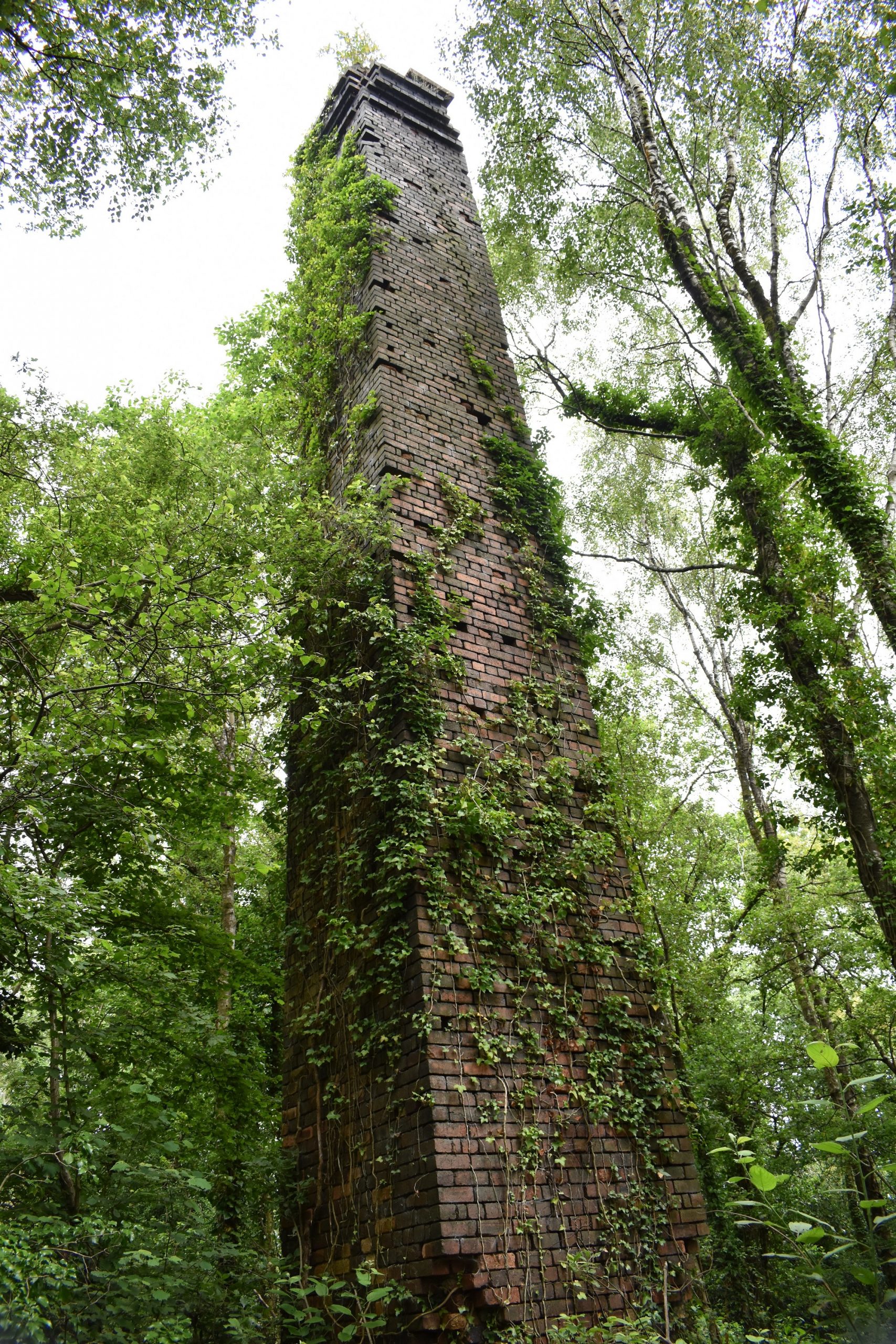
One flash of lightning struck the chimney stack at the Cardonnel tinplate works in Skewen , sending it crashing to the ground – several workers were said to have had a narrow escape. Walesonline
Read the full article here Walesonline
The Cambrian
March 16, 1900
Accident at the Cardonnel Tinplate Works.
Last week, John Davies, aged 18, was behind one of the rolls waiting- for a plate when it curled, caught him on the arm. and opened the upper part of his arm.
Dr. Elias was soon on the scene, and the poor lad was taken home on horse-back after his arm had been bandaged. Dr. Whittington also was sent for.
The young man is a son of Mrs. Jenny Davies, Mooretown.
GORPHWYSFA CHAPEL. — On Thursday evening last a special meeting was held in connection with the Methodist Century Fund.
National Library of Wales Archive
The Cambrian
April 06, 1900
Cardonnel Tinplate Workers Annual Dinner.
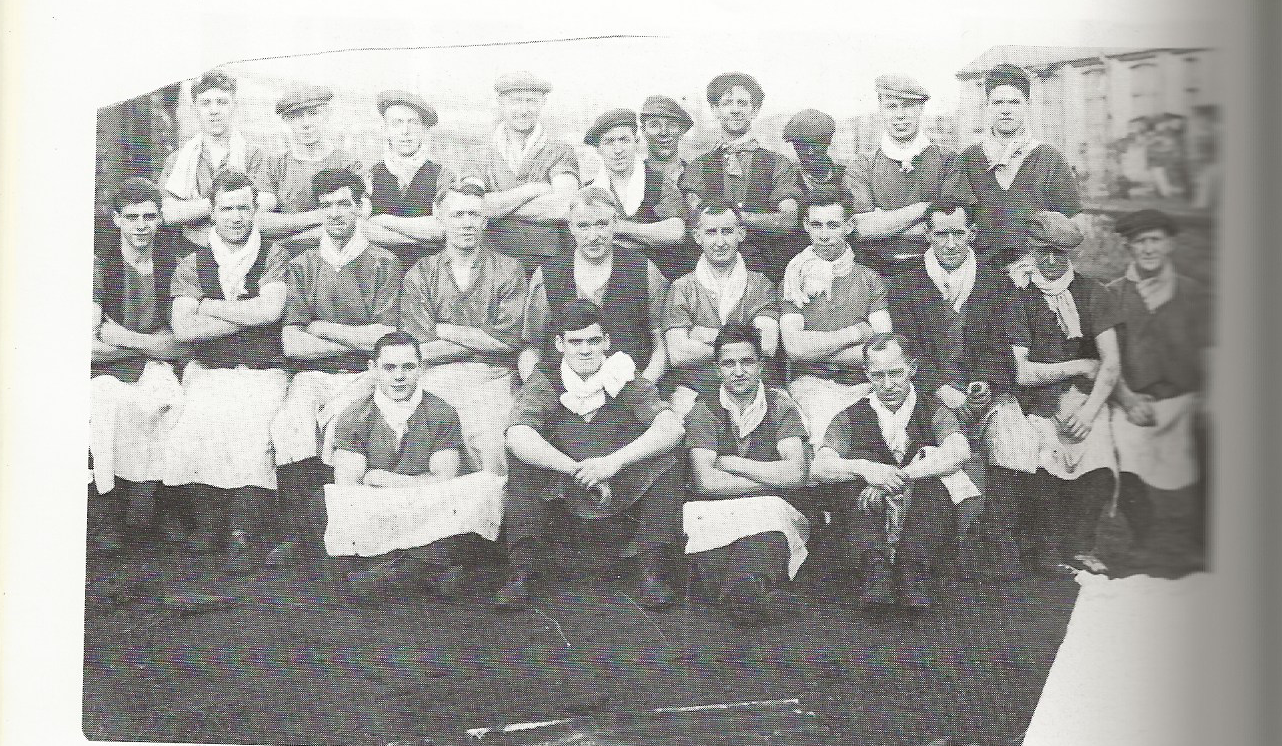
The annual dinner of the workmen at the Cardonnel Tinplate Works, was held at the Hope and Anchor Hotel, Neath Abbey, this week. The fare was excellently laid and served by Mrs. Phillips, the hostess. Mr. Rees, Waenandrew Farm, anti- mechanic at the Tinplate Works, was voted to the chair, and Mr. Parker to the vice- chair. Among others present were Dr. James Elias, District Councillor Wm. Howells, and Mr. Strick (manager).
The Chairman gave the loyal and patriotic toasts in most felicitous terms. Dr. Eliai proposed the “Army and Navy,” in a capital speech. Mr. Wm. Howells gave Success to the Cardonnel Tinplate Company.” He said it was a toast which he had the greatest pleasure in proposing, as the company and its workmen had always worked well together. Mr. Strick (manager) replied. He said that few workmen got on so well with their employers. They did have differences, as in all other trades, but they were soon settled. He hoped that the good feeling now existing would always attend their efforts.
During the evening, several songs were sung and recitations delivered by Mr. John Williams, Margam Boys Mr. David Roberts, The Soldiers sf the Queen,” which was loudly encored recitations by Mr. Francis Jones, and Mr. Tom Richards. EBENEZER CHAPEL, NEATH ABBEY.
The annual special meetings in connection with the above chapel took place on Sunday and Monday last, when excellent sermons were delivered by the Revs. D. O. Jones, Liverpool, and —. Pritchard, Cardiff. Collections were made at each meeting, which greatly augmented the building funds.
National Library of Wales Archive
Evening Express
08 December, 1906
Struck by an Engine.
SWANSEA CYCLIST UPSET – Shortly before half-past one on Friday afternoon Mr. Percy Hedley, who is brother to Mr. E. Hall Hedley, Pontardawe, was proceeding along the level crossing over the railway line near Cardonnel Works, which are situated between Briton Ferry and Neath Abbey, when he was knocked down by the engine of the 1.15 passenger train from Neath to the East Dock Station, Swansea.
Mr. Hedley, who is about 40 years of age and lives at Walter-road, Swansea, was wheeling a bicycle over the crossing when he noticed the 1.10 motor rail car from Swansea coming up.
It was in endeavoring to get out of the way of this car that he seems to have got in the way of the train coming in the other direction. He was struck down by the governor rod of the engine, and the most serious injuries were to the thigh.
Mr. Hedley was also hurt on the shoulder and head. He remained conscious, though in great pain, and was taken to the Swansea Hospital.
National Library of Wales Archive
The Cambrian
May 28, 1909
Death of Mr Rosser, Cilfrew.
Director of Cardonnel Tin-Plate Works. Mr. WM. Rosser, of Brynamlog, Cilfrew, near Neath, died with tragic suddenness on Monday night.
Mr. Rosser was about 60 years of age, and appeared in his usual health when he left his residence, about nine o’clock on Monday evening, to visit a man named Davies, living in a cottage 150 yards away. Whilst talking, Mr Rosser, who was sitting on a chair, suddenly threw back his head and expired.
Dr. Jeeves, assitant to Dr. Whittinghton, the family medical attendant, was quickly on the spot, but life was extinct. Mr. Rosser leaves a widow and several grown-up children.
He was one of the managing directors of the Cardonnel Tin-plate Works, and was well-known in comerial circles in South Wales.
National Library of Wales Archive
Llais Llafur (Labour voice)
January 03, 1914
When Doctors Disagree.
Mr Howel Cuthbertson, coroner, opened an inquiry at Skewen on Tuesday on Thomas Richards, a middle-aged blacksmith, of Bosworth Road, Skewen, who was injured at the Cardonnel Tin-plate works in October last, and who died on Friday.
An injury to the left shoulder was due to the penetration of a piece of steel, which was removed later by Dr.D.L.Jones.
The evidence of Dr Jones and that of Dr. Prell as to the cause of death did not agree and the coroner ordered a post-mortem examination.
National Library of Wales Archive
Herald of Wales and Monmouthshire Recorder
07 October, 1916
The first from Tinplate Works to give his life for his country.
Mr. and Mrs. John Williams, Gelynog. Bosworth-road, Skewen, have just received an official information that their son. Pte. John W. Williams, of the Welsh Guards, died on the 27th of September from wounds received in action. He was 19 years of age, and had been at the front since May last, having gone out with a contingent of the Welsh Guards.
He was of stalwart physique, standing over 6ft. in height. He was one of a large number who have joined the colours from Calfaria Welsh Baptist Church and Sunday School, and was held in high esteem by all.
Possessed of a fine baritone voice, he had delighted many with his singing. When a young lad he was an exception- ally sweet soprano, and had captured many prizes at local eisteddfodau. Previous to enlisting he was employed at the Cardonnel Tinplate Works, and is the first from there to give his life for his country.
A brother, Sergeant. Dd. Williams, of the: R. W. Fusiliers, who was a teacher at the Skewen Lower Schools, is also serving in France.
National Library of Wales. Archive
Herald of Wales and Monmouthshire Recorder
October 20, 1917
Official news has been received of the death of Pte John Walter Reed, Royal Welsh Fusiliers, who, prior to the war, was employed at the Cardonnel Tinplate Works, Skewen. He leaves a widow and four children who live at Regent Street, East Briton Ferry.
National Library of Wales. Archive
Herald of Wales and Monmouthshire Recorder
April 27, 1918
A True Hero.
Mr and Mrs. Philip Jones, New Road, Skewen were informed on Wednesday, in a sympathetic letter from his Major that their son, Lce-cpl. Emrys Jones, had been killed on the 19th April. De-ceased was 21 years of age, and prior to volunteering in November, 1915, was employed at the Cardonnel Tinplate Works, Skewen.
Comment: A true hero considering the British Government never introduced conscription until March 1916 because voluntary enlistment could no longer meet the army’s need for recruits.
Emrys Jones, would have probably been exempted from the draft anyway, due to his occupation where many classes of industrial worker were not required to join.
But he chose to defend and die for his country.
National Library of Wales. Archive
Minister of Supply in Parliament.
November 19, 1940
Cardonnel Tinplate Works.
Sir W. Jenkins asked the Minister of Supply in Parliament on ‘whether he is aware that the Cardonnel Tinplate Works, Skewen, have been idle for over three months, and no suggestion of a restart and that there is a large number of skilled men in this area unemployed; and why essential works are allowed to stay idle with skilled workers waiting to meet the needs of the country?
In reply Mr. Harold Macmillan answered that supplies of steel are not sufficient to keep all tinplate works running to full capacity, and I am afraid that the works at Cardonnel could only be reopened at the expense of employment elsewhere.
Cardonnel Tinplate Works finally closed in 1940.
UK Gov. Hansard
Our thanks go to ‘Old Neath & District’ in Pictures by Neath Antiquarian Society